
Background
The global financial system is entering a period of profound structural transformation. The conditions that have underpinned financial stability over recent decades—deep global integration, relatively coherent policy frameworks, and relatively predictable monetary transmission mechanisms—are increasingly under strain.
Three interrelated dynamics are reshaping the financial landscape:
- Geopolitical and financial fragmentation, leading to the emergence of regional blocs, shifts in capital flows, and growing divergence in monetary, financial, and regulatory regimes
- Rising systemic complexity, with new and less visible sources of risk arising from market-based finance, financial innovation, technological change, and deeply interconnected balance sheets
- Institutional strain on central banks, whose mandates, policy tools, and operating frameworks are being tested by overlapping objectives, including price stability, financial stability, climate risks, and digital transformation
Together, these developments raise a fundamental question:
Can existing financial architectures—and the central institutions that anchor them—continue to ensure stability in a more fragmented, uncertain, and complex global system?
The International Workshop on Financial System Architecture and Stability (IWFSAS) provides a unique platform to address this question by bringing together leading academics, central bankers, regulators, and market practitioners to examine the evolving foundations of financial stability.
IWFSAS 2026 organizers:
This year’s IWFSAS meeting will be hosted by Bayes Business School, in collaboration with, and the Euro-Mediterranean Economists Association (EMEA) and the Gustavson School of Business at the University of Victoria.
Aim and Topics
IWFSAS 2026 aims to:
- Analyse the implications of financial fragmentation for global and regional financial stability
- Identify emerging sources of systemic risk in an increasingly complex and interconnected financial system
- Assess the evolving role of central banks in managing stability under conditions of uncertainty and structural change
- Explore whether existing policy frameworks and institutional designs remain fit for purpose
- Foster dialogue across academia, central banks, international institutions, and financial markets to generate forward-looking and policy-relevant insights
We invite theoretical, empirical, and policy-oriented contributions on topics including, but not limited to:
Fragmentation and Financial Architecture
- Regionalisation of financial systems and capital flows
- Fragmentation of global liquidity and payment systems
- Currency blocs, reserve currency dynamics, and monetary sovereignty
- Implications of sanctions, trade tensions, and geopolitical risks for financial stability
Systemic Risk and Financial Complexity
- New sources of systemic risk in market-based finance
- Interconnectedness, contagion, and network effects
- Shadow banking and non-bank financial intermediation
- Systemic implications of leverage, liquidity mismatches, and procyclicality
Central Banking in a Changing Environment
- Evolving mandates of central banks (price stability vs. financial stability vs. climate and digital agendas)
- Monetary policy transmission in fragmented financial systems
- Central bank balance sheets and unconventional policy tools
- Coordination between monetary, macroprudential, and fiscal policies
Technology, Digitalisation, and Financial Stability
- Central Bank Digital Currencies (CBDCs) and monetary sovereignty
- Fintech, AI, and algorithmic trading: risks and opportunities
- Cyber risks and operational resilience of financial systems
- Digital financial infrastructures and cross-border payments
Policy Frameworks and Institutional Design
- Rethinking global financial governance in a fragmented world
- Role of international financial institutions and coordination mechanisms
- Macroprudential frameworks in complex systems
Crisis management, resolution regimes, and lender-of-last-resort functions
Submission Guidelines
Authors are invited to submit:
- Full papers
- Submissions should clearly state the research question, methodology, and key findings.
All submissions must be in PDF format and written in English.
Important Dates
- Submission deadline: 19 June 2026
- Notification of acceptance: 24 July 2026
- Registration deadline: 1 September 2026
- Workshop dates: 09-10 October 2026


Program Co-Chairs


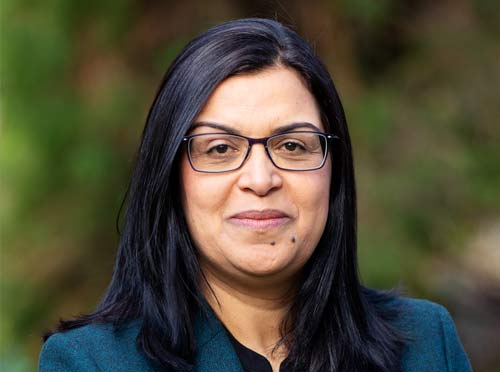

Local Organizing Committee

Angela Gallo
Bayes Business School, City St George’s, University of London & CBR, City University of London
Angela.Gallo.1@city.ac.uk


Francesc Rodriguez-Tous
Bayes Business School, City St George’s, University of London
Francesc.Rodriguez-Tous@city.ac.uk


Dongqiang Liang
Bayes Business School, City St George’s, University of London
Dongqiang.Liang@city.ac.uk

Doriana Cucinelli
Euro-Mediteranean Economists Association


Sandra Challita
Euro-Mediteranean Economists Association

George Christopoulos
Euro-Mediteranean Economists Association